
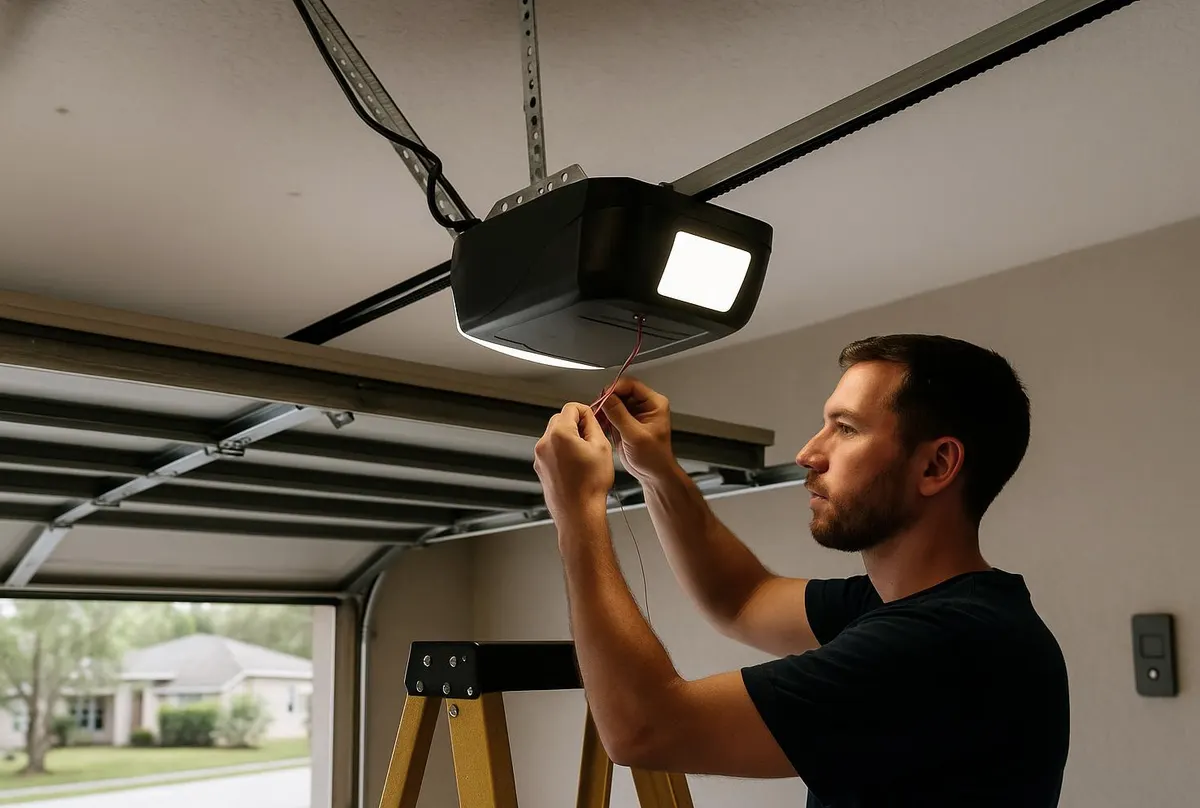
The first instinct is to hold the wall button down and let the opener fight it out, or to give the door a hard yank by hand once it stalls halfway up. It feels like the obvious move — the motor is strong, the door is heavy, surely a little extra force will break it loose. It's also the fastest way to strip the opener's gears, snap a cable, or bend a track, turning a five-minute fix into a same-day repair call.
In most of the country, a "frozen" garage door means actual ice sealing the bottom weatherstrip to the slab. That happens occasionally here too, during the handful of nights each winter when temperatures near Dade City, San Antonio, or Zephyrhills dip into the 30s. But far more often in this area, what feels like a frozen door is really a sluggish door — one that's stiff, dragging, or hesitating because of the moisture and temperature swings that come with Central Florida winters, not a solid sheet of ice.
Symptoms to Watch For
- The door starts moving, then stalls or reverses partway up or down.
- Visible frost or a thin ice film on the bottom seal or the slab underneath it, usually after a clear, cold overnight following a rainy afternoon.
- Grinding, squealing, or chattering from the rollers that wasn't there a month ago.
- The opener motor hums but the door barely creeps, or the opener's force sensor trips and reverses the door immediately.
- The door feels heavier when operated manually, especially first thing in the morning.
What a Technician Checks First: Tracks and Seals
Before touching springs or the opener, a technician looks at the bottom seal and the tracks, because this is the most common culprit after Florida's afternoon downpours. Rain pools against the slab, soaks into the vinyl bottom seal, and if a cold front rolls through overnight, that trapped moisture can stiffen the seal or, rarely, form a thin glaze of ice that tacks it to the concrete.
The fix: never force the door. Pour lukewarm (not hot) water along the seal line to loosen it, or run a hair dryer on low heat if the seal is only stuck, not iced. Hot water can warp vinyl weatherstripping or crack a cold aluminum panel, so lukewarm is the limit. Once freed, dry the slab and seal thoroughly before closing the door again.
Rollers and Hinges
Next, the technician checks the rollers and hinge pivots. Grease and lubricant thicken as temperatures drop, and if the door hasn't been lubricated recently, cold mornings expose that stiffness fast — the rollers drag in the track instead of rolling freely. Add in the rust that creeps into steel hinges and roller stems from months of humidity and salt-tinged air (more of an issue the closer a home sits to the coast), and the hardware can bind even on a mild morning.
The fix: a light silicone-based garage door lubricant applied to rollers, hinges, and the spring coils, worked in by hand-operating the door a few times. Any hardware showing heavy rust or pitting should be replaced rather than greased over, since rust weakens the metal rather than just making it noisy.
Spring Tension
If the door moves but feels noticeably heavier than usual, especially when lifted by hand with the opener disconnected, the springs are the next check. Metal contracts slightly in cold weather, which can marginally reduce spring tension on an already-aging system. A door that was borderline out of balance in October can tip into "clearly struggling" territory during the season's first real cold snap.
The fix: a balance test — disconnect the opener, lift the door halfway by hand, and see if it holds position. If it drops or shoots up, the spring tension needs adjustment or the springs need replacing. This is not a DIY adjustment; torsion springs are under enough force to cause serious injury.
Opener Settings and Sensors
Last, the technician checks the opener itself. Circuit boards and sensors can get slightly less responsive in cold, damp conditions, and force or limit settings that were fine all summer may need a small adjustment once the door's mechanical resistance changes. A door reversing immediately after barely moving is often an opener force-sensitivity issue layered on top of one of the mechanical problems above, not a separate failure.
When to Call Wesley Chapel Door & Opener
If the door sticks to the slab, drags in the track, or feels heavy even after you've worked some lubricant into the hardware, it's time to get a second set of eyes on it before something gives way under strain. Our technicians start with a full inspection — tracks, rollers, spring balance, and opener settings — and most sluggish-door calls end with a Garage Door Maintenance & Tune-Up to reset lubrication, hardware, and balance, or a targeted Garage Door Spring Repair if tension has genuinely dropped. Either way, you'll know exactly what was wrong and what it took to fix it.
If your garage door is sticking, stalling, or groaning through its cycle this season, call Wesley Chapel Door & Opener and we'll get it moving smoothly again before the next cold front rolls through.